
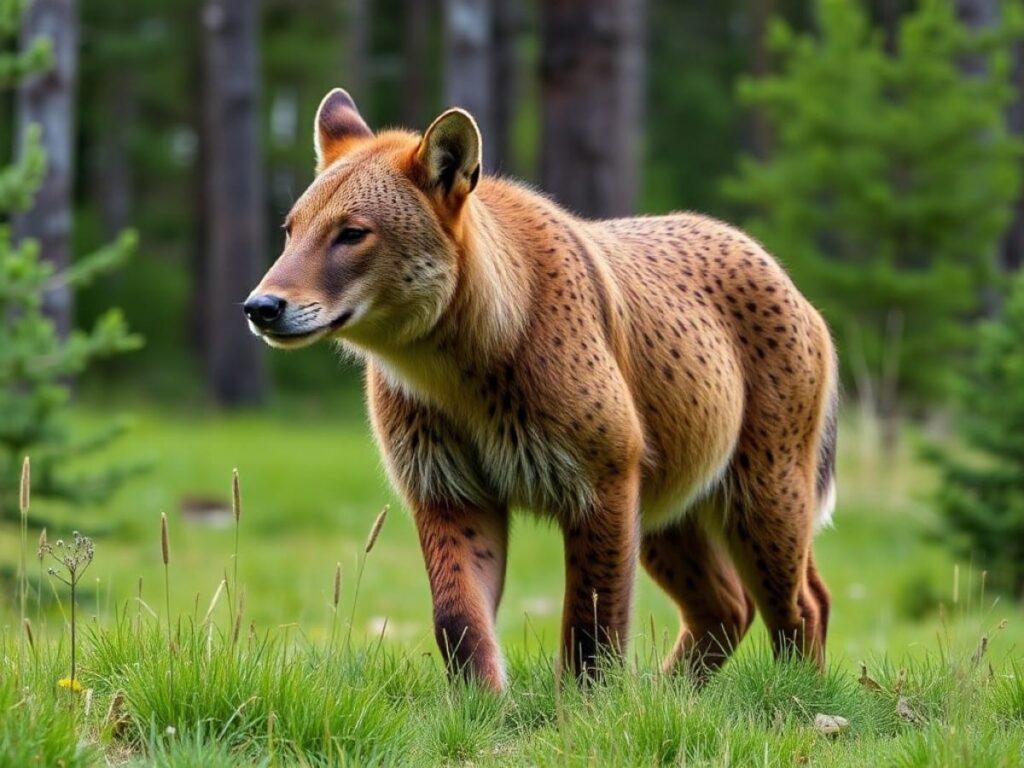
Colorado wildlife officials have launched a plan to reintroduce the wolverine, one of the largest members of the weasel family, to the state where it has been absent for a century.
After being hunted to extinction, small populations of this solitary scavenger survived in Idaho, Montana, Washington, and Canada, from where they have gradually moved south to Utah and northern Wyoming.
Colorado Parks and Wildlife (CPW) announced the intention to form and implement a Colorado Wolverine Restoration Plan, pending public comment and stakeholder participation following the passage of legislation in 2024 mandating it.
“Colorado has excellent unoccupied wolverine habitat, and we have the opportunity to conserve a species that has been absent from our state,” former Colorado Republican Sen. Perry Will, who introduced the original legislation, said in a news release.
Any plan should include concrete, honest details, including where wolverines will go and where they will come from, how many can be housed in a given area, what the benefit is to the natural ecosystem, and what the recourse options are for a rancher in the event that one preys on his livestock.
The CPW argues that, understanding that wolverines lived in Colorado for thousands of years, everything living in the ecosystem is now well adapted to their existence.
Unlike gray wolves, whose reintroduction began controversially in 2020, CPW does not expect any livestock predation, as these mustelids, although strong, have a body weight of only 20 to 35 pounds, hunt alone, and primarily feed on scavengers.
“A planned reintroduction… would bring in about 45 wolverines with a broad genetic background. This will have a better chance of establishing a robust long-term population than a single male and female coming into Colorado, encountering each other, and producing enough offspring to establish a population,” said CPW Wolverine Coordinator Dr. Robert Inman. “Colorado and the wolverine population will be better off with a planned reintroduction.”
Right now, the plan would establish three different towns at high elevations. The first north of I-70 on public lands that include Rocky Mountain National Park, the second in a central part of the state known as the Elk and West Elk Mountains between I-70 and Highway 50, and the third in the San Juan Mountain Range in southwestern Colorado.
CPW believes Colorado can support about 100 wolverines once the population is established, primarily because an adult male wolverine’s territory can extend up to 500 miles.
“Wolverines naturally exist at very low densities wherever they are found. 50 to 100 wolverines may not seem like a lot, but that’s probably in the same range as historical capacity here in Colorado,” Inman said, adding that there were never more than a few thousand wolverines nationwide. “It would also represent about a quarter of the population in the Lower 48 states.”
THE RETURN OF THE GLUTTON: Super Rare Wolverines Not Seen for a Century on Mt. Rainier—Now They’re Back in Familiar Form
SF Gate reports that Colorado had previously considered reintroducing the wolverine, but decided to focus, in 1998, on the bobcat.
While CPW is taking steps to ensure that ranchers and farmers are fairly compensated if a wolverine takes one of their animals, one local industry is 100% on board: ski resorts.
REBUILDING WILDLIFE POPULATIONS: The American Martin could return to Pennsylvania forests after a 100-year absence
“[Nosotros] “We participated in the rigorous engagement process conducted by CPW for this wolverine reintroduction,” said Melanie Mills, president and CEO of Colorado Ski Country USA in a statement.
“We support the reintroduction of the wolverine… and applaud CPW for its commitment to the conservation of this remarkable species and for doing so in a way that addresses the concerns of our industry.”
You may also like
-
The new president of Peru defends that sex at an early age helps women psychologically
-
Monks arrive after 15 weeks of walking: Peace and compassion flood the streets of DC.
-
many were deceived with false promises
-
“It is no longer a focus of terrorism”
-
This is how Greece will punish NGOs that facilitate the entry of immigrants