
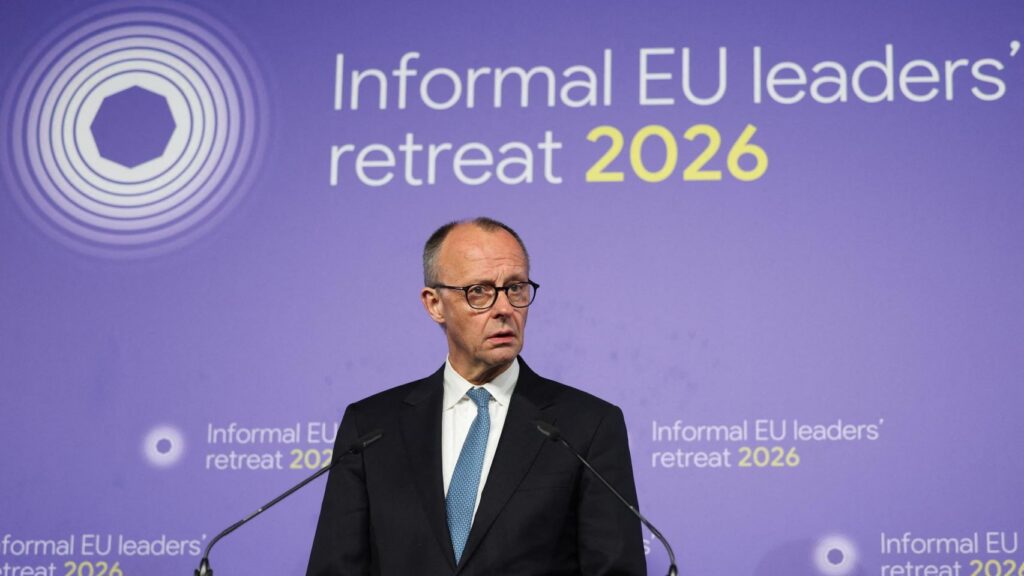
The German Government is considering promoting a structural transformation of its foreign intelligence service, the Federal Intelligence Service (BND)with the aim of turning it into a much more autonomous, operational and technologically advanced agency.
German leaders maintain that the urgency is greater in their own country, since the foreign intelligence service, the BND, operates under a much more restrictive legal framework than other comparable agencies.
These limitations were intentionally established by the different state governments, after the Second World War, with the aim of preventing the excesses committed by the spy apparatus of the Nazi regime, the Gestapo, from occurring again.
The plan comes as leaders in Germany and other European countries increasingly fear that the U.S. president Donald Trump could suspend the intelligence exchange on which Europe largely depends, or use that dependence as a tool of political pressure.
Just as European countries must deeply strengthen their armed forces to gain greater strategic autonomy, officials in Berlin say, the German intelligence apparatus also needs to become much more robust, effective and independent.
Due to the situation of political instability on an international scale, the previous German administration had already promoted a historic increase in defense spending after the Russian invasion of Ukraine, announced by the then chancellor Olaf Scholz.
During his mandate, the previous Executive activated an extraordinary fund of 100,000 million euros to modernize its armed forces. This increase responds both to the Russian threat and to the need for greater autonomy in the face of possible changes in United States foreign policy.
The German coalition government, headed by Chancellor Friedrich Merzhas committed to further raising the proportion of German GDP dedicated to defense to 3.5% by the end of the decade, with the aim of further strengthening its capabilities and contributing more to European security.
The authorities in Berlin maintain that the situation is especially pressing in their country, since the foreign intelligence service, the Bundesnachrichtendienst (BND), operates under a much more restrictive legal framework than that of equivalent organizations in other states.
In any case, the idea of the German federal government is to continue working with the United States on security matters, as explained Marc Henrichmannpresident of a special commission of the Bundestag in charge of supervising the country’s intelligence services, in statements to the newspaper Politico.
“We want to continue working closely with the United States,” although he emphasizes that “if an American president decides to go it alone, regardless of the leader, we must be able to fend for ourselves, without their help.”
However, the limitations in force in the secret services have had the side effect of making Germany largely dependent on the United States to obtain intelligence information, something that is now perceived as a possible risk.
Henrichmann has highlighted the importance in the world of intelligence of “being able to offer and what others offer you”, which is why he points out that for Germany “if it is only capable of receiving information, it suffers a fairly high risk in this political context.”
Faced with this situation, Merz now wants to strengthen and free his country’s foreign intelligence service from ties, granting it much broader powers to carry out acts of sabotage, carry out cyber operations and develop espionage activities in a more aggressive way.
For its part, Thorsten Freiresponsible in the Chancellery for the reform of the intelligence services, this week compared the plans devised by the government team with the Zeitenwende – the “change of era” or “historical turning point” proclaimed by the previous chancellor, after the large-scale invasion of Ukraine by Russia.
Nazi legacy
The Bundesnachrichtendienst was created in 1956 with strong legal limitations intended to prevent a repetition of the abuses committed by the Gestapo and the Schutzstaffel (SS) during the Nazi regime, although in its early years many of its agents had belonged to the apparatus of the Third Reich.
The BND is not the direct successor of the Gestapo, since the latter was the secret police of the Nazi regime in charge of internal repression, while the current one is a foreign intelligence service created in post-war democratic Germany and subject to parliamentary control.
However, it is true that in its early years, it incorporated numerous former members of Third Reich intelligence structures, a historical fact widely documented and later recognized by official investigations.
To strictly separate the BND from the police and avoid interference in internal affairs, the body was placed under the direct supervision of the Chancellery and subject to a rigorous parliamentary control mechanism.
Its powers were limited to the collection and analysis of information, without granting its agents the legal capacity to intervene directly in order to neutralize detected threats.
Despite representing very different things, this link and what was done by the Gestapo during the years of Nazi terror has historically been one of the main reasons why Germany has always tried to avoid giving greater prominence to secret intelligence agents.
The approach of the German Executive is aligned with the message of the president of the European Commission, Ursula von der Leyen, who appealed on Saturday to revive the mutual defense clause of the European Union (EU), with the aim of making Europe more independent to guarantee its own security.
During her appearance at the Munich Security Conference, Von der Leyen assured that the EU faces “external forces that try to weaken the Union from within”, which is why she demanded that this mutual defense clause represent the backbone of the new European Security Strategy.
In fact, the German case is not the only one that is occurring at the European level due to the policy implemented by the Trump Administration in matters of security and defense, which has led other nations to take measures to reduce their dependence on the United States or other allies.
Currently, the European Union itself is exploring the creation of its own community intelligence service, under the presidency of Ursula von der Leyento coordinate what is collected by national agencies and reinforce European autonomy in security.
This structure would still be in a very initial design phase, but it is part of the debate on sovereignty and intelligence cooperation within the EU.
Regarding the policies implemented by other European states in terms of security, in recent years, different countries have intensified the debate on the need to strengthen European cooperation in intelligence matters.
For its part, France has significantly strengthened its intelligence and defense capabilities in recent years, a policy that the German chancellor now seems to want to follow.
This political shift has occurred due to growing geopolitical uncertainty, driven by the outbreak of war in Ukraine and doubts about the continued commitment of the United States to European security.
In any case, under the presidency of Emmanuel Macron, France has approved new military programming laws, has increased the budget of the Armed Forces and the intelligence services and has expanded powers to prevent terrorism.
Paris also promotes greater European strategic autonomy, defending that Europe has its own capabilities without depending excessively on the United States.
This has been a topic of debate at the Security Conference held in Zurich, Switzerland, this Saturday, in which the Secretary of State, Marco Rubiohas sought to reassure European partners, claiming that “they only want strong allies.”
In any case, the final objective of European countries is not to break with Washington, but to reduce structural dependence on the United States in key areas such as satellite surveillance, cyber intelligence or anti-terrorist early warning.
You may also like
-
vehicles burned, flights and classes suspended
-
Incredible: Bird droppings fueled the rise of a little-known coastal kingdom, archaeologists reveal.
-
The Armed Forces of Mexico kill ‘el Mencho’, the most wanted drug trafficker and boss of the Jalisco Nueva Generación cartel
-
Brussels asks Donald Trump for complete “clarity” on the tariffs announced after the supreme court’s ruling
-
The US Secret Service kills a man who tried to enter Trump’s residence in Florida