
The keys
nuevo
Generated with AI
nuevo
Generated with AI
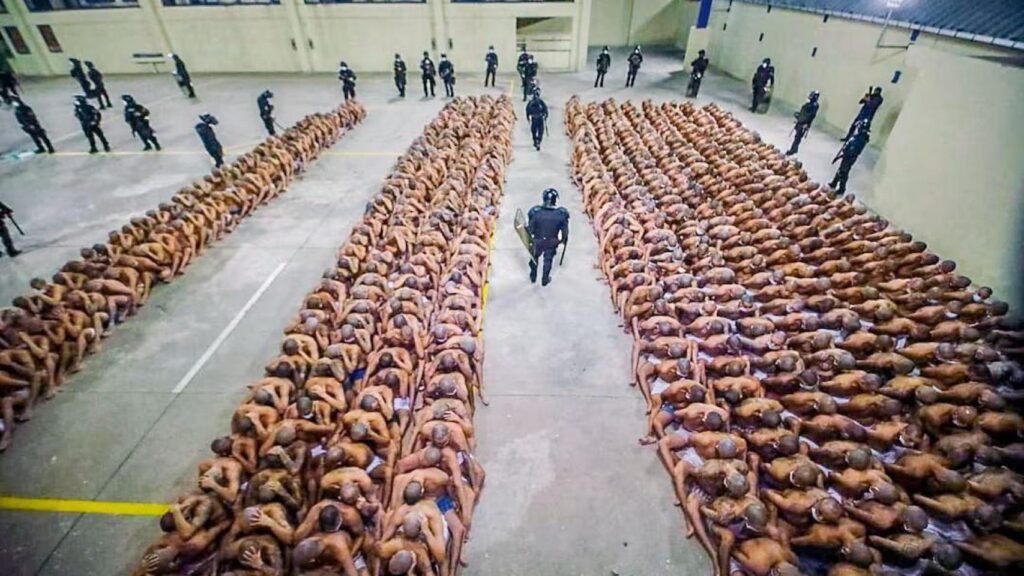
A decision that contrasts with the Republican’s praise for Salvadoran President Nayib Bukele and his ‘tough’ policy against crimeincluding the controversial Terrorism Confinement Center (Cecot), its megacárcel symbol of their fight against gangs.
“Today, the State Department is taking steps to promote accountability for abuses committed during the Murillo-Ortega dictatorship against political prisonersby sanctioning the director of the maximum security prison The Model, Roberto Clemente Guevara Gómez,” reported the Secretary of State, Marco Rubio.

In a statement, Rubio detailed that this designation is due to the participation of Guevara Gómez “in a serious violation of the human rights of a political prisoner”, and that the restrictions imply the prohibition of entry to the United States of the sanctioned person, and potentially, of their immediate family members.
All this when at the same time Trump has turned the Salvadoran president into a central reference of his speech on security and migration.
In several public events, the US president has described Bukele’s work as “fantastic“, alluding to the drastic reduction in homicides and the mass incarceration of alleged gang members.
In his narrative, the Salvadoran model demonstrates, according to Trump, that The heavy hand and high security prisons can “recover the streets” against organized crime.
In this context, Trump has defended the use of the El Salvador megaprison as a possible destination for migrants and US citizens convicted of serious crimes linked to gangs.
For the White House, cooperation with Bukele and the use of facilities such as CECOT are part of a broader strategy to “outsource” the fight against transnational crime and strengthen immigration control in the region.
However, the Bukele model and, in particular, the CECOT have been subject of harsh criticism by human rights organizations and international organizations.
Amnesty International, Human Rights Watch and UN rapporteurs have denounced “brutal” detention conditions, overcrowding, extreme restrictions and reports of torture and mistreatment within the megaprison, as well as the suspension of basic guarantees within the framework of the Salvadoran emergency regime.
Various reports also indicate thousands of arbitrary arrests and the absence of individualized judicial processes for many of the people imprisoned as suspected gang members.
Coordinated deportations between the United States and El Salvador have also raised concerns, especially in cases of people identified as gang members without a full trial or adequate access to defense.
Journalistic investigations have documented how security agreements between Washington and El Salvador They have prioritized speed in the expulsion of suspects over procedural guarantees, which, according to experts, could violate international obligations on asylum and human rights.
You may also like
-
Dani Miret, Joventut coach: "With Ricky I won the lottery"
-
Trump demands that Starmer “not lose control” of the island of Diego García in the Indian Ocean in the face of a possible attack by Iran
-
eight skiers found dead and one missing after being hit by avalanche
-
Tow truck driver in Minnesota returns vehicles after ICE arrests: families regain hope
-
Democratic Congressman Claims Epstein Files Reveal Trump Rapes of Children